

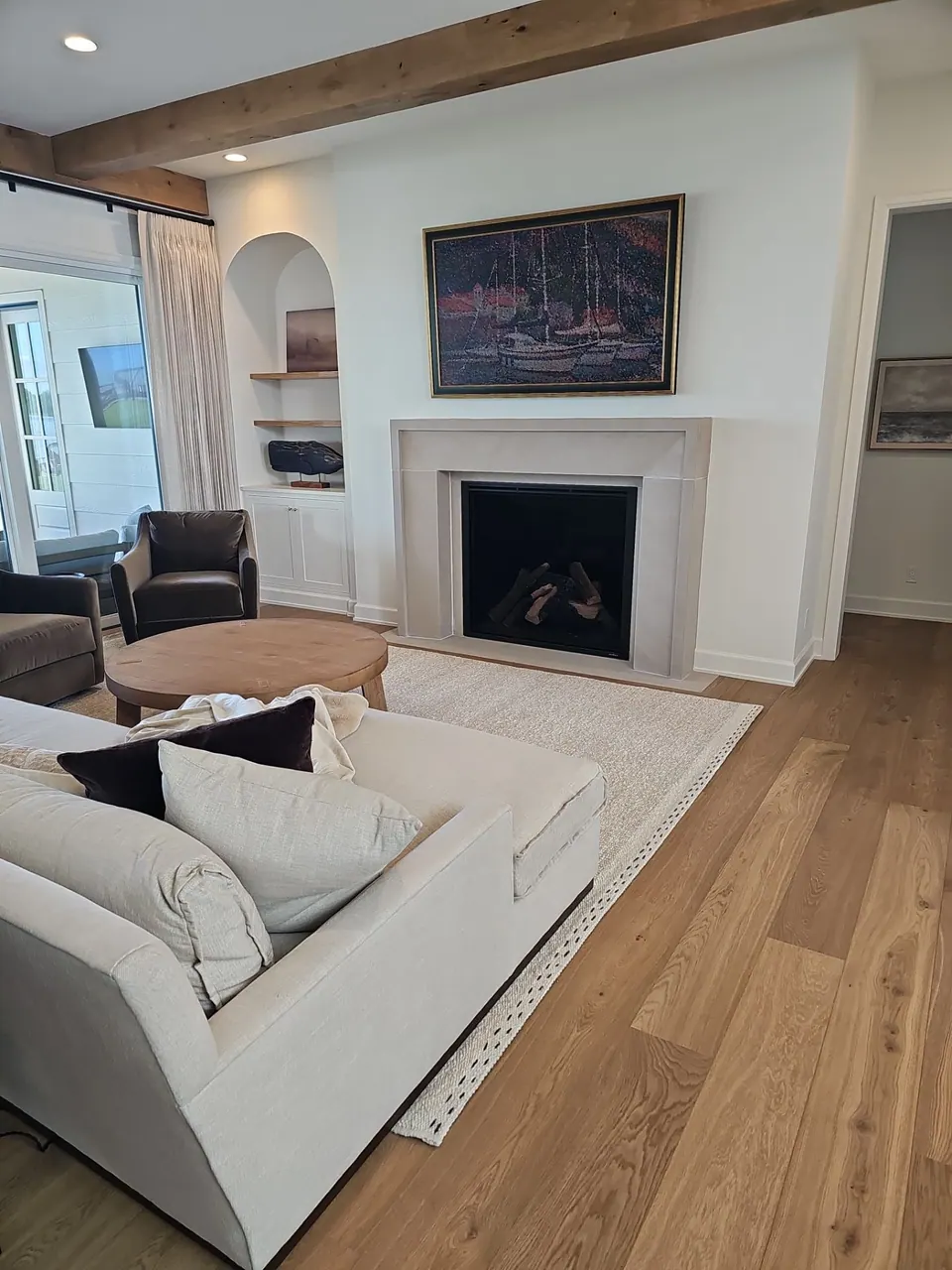
What a Brushtek interior repaint includes
An interior repaint is mostly prep with some painting at the end. We move furniture to the middle of the room and cover it, mask floors and fixtures, then go over every wall with a light in hand. Nail holes get filled, dents get skimmed, and rough patches get sanded flat. Anything filled gets spot primed so it does not flash through the finish coat. We cut ceilings and trim by brush and roll the walls in overlapping passes so the sheen reads even from the doorway. Two coats is the standard on a color change. At the end of each day the room is vacuumed and the tools are out of your way. Before we load the van, we walk every room with you and touch up what you point at.
- Furniture moved to the center, covered and put back
- Holes filled, dents skimmed, repairs sanded and spot primed
- Ceilings, walls, trim and doors in whatever combination you want
- Brushed cut lines at ceilings, casings and corners
- Daily cleanup and a final walkthrough with you
Painting in a Minnesota winter versus a Minnesota July
The two seasons ask for different habits. In January, forced-air heat drops indoor humidity well below what paint manufacturers assume. Paint flashes fast, which means a wet edge is harder to keep on a long wall and lap marks show up if you stop halfway. We work smaller sections, keep the wet edge moving and turn the thermostat down a couple of degrees in the room being painted. Low-odor waterborne paints let us work with the windows shut. In July the problem flips. Humid air slows drying, so recoat times stretch and a second coat rolled too early will drag. We plan the day around that: ceilings and trim in the morning, walls after lunch, second coats the next day if the dew point is high.
Oak trim, knockdown ceilings and other west-metro house habits
A lot of the housing stock we paint went up between the late 1980s and the mid 2000s, and it shares some traits. Honey oak trim and doors were standard in that era, and painting them white is one of the most common requests we get. It works, but it takes degreasing, a scuff sand, a bonding primer and two coats of trim enamel, not a quick coat of wall paint. Knockdown and popcorn ceilings from the same years soak up paint and need a thicker roller nap and more material than a smooth ceiling. Builder-grade flat paint on newer walls flashes badly when you touch it up, so a full coat is often the only way to get an even look. We point these things out at the walkthrough so the estimate reflects the real work.
- Oak trim to white: degrease, scuff, bonding primer, two coats of enamel
- Textured ceilings: thicker nap, more paint, flat finish only
- Builder flat on walls: touch-ups flash, plan on a full coat
How we work in a house you are living in
Most of our interior jobs happen while the family is home. We paint in zones so you are never out of every room at once: bedrooms one day, the main floor the next, with hallways and stairwells timed for when traffic is lowest. Kitchens get done between meals where we can. You keep your bedroom until the last night. Kids' rooms and nurseries get low-odor product and a fan in the window if the weather allows it. Pets are the one thing we ask you to manage, since a curious dog and a wet baseboard do not mix. Our post on how to prepare for interior painters lists what to move, what to leave, and roughly how long each room is out of service.
When we would talk you out of it
- Walls still damp from a leak or ice dam. Paint will not hold on wet drywall. Fix the water first, let it dry or replace the board, then call us.
- A single scuff or one nail hole. A service call for that is poor value. Keep a labeled quart from the last paint job and touch it up yourself.
- Sagging ceilings or texture that is peeling off in sheets. That is a drywall contractor's job before it is ours, and we will tell you so at the walkthrough.
What you get
- Patching, sanding and spot priming before any color goes on
- Brushed cut lines at ceilings and trim instead of tape ridges
- Sheen matched to the room: flat ceilings, scrubbable eggshell in halls and kids' rooms
- Low-odor products so winter work happens with the windows shut
- Rooms sequenced so you are never locked out of the whole house
- Written estimate that lists every room, surface and coat count
How it goes
- 1
Photos first, then a walkthrough
Text us photos of the rooms for a quick first read. If it looks like a fit, we come out, measure, and leave you a written estimate that lists each room, surface and coat count.
- 2
Colors and sheens settled before day one
We put sample patches on the actual walls, not on cards, and check them in morning and evening light. Sheens get picked per surface: flat for ceilings, eggshell or satin for walls, enamel for trim.
- 3
Prep, then paint, one zone at a time
Furniture to the center, floors masked, walls patched and sanded, then primer where needed and two finish coats. Each zone is cleaned up the same day so the house stays livable.
- 4
Walkthrough with you before we leave
We walk every room with a light and a brush in hand. You point, we touch up. Leftover paint is labeled by room and left with you for future touch-ups.
What does interior painting cost in the west metro?
We quote from photos for a rough range and from a walkthrough for the firm number. Labor is most of an interior paint bill, so anything that adds hours moves the price: more rooms, taller ceilings, more trim to cut around, and a color change that needs two full coats instead of one. Prep is the other big lever. A house with drywall damage, glossy oak trim to convert, or builder flat that needs a full coat takes longer than clean walls that need a refresh in the same color. Empty rooms are faster than furnished ones. Sheen and paint grade matter less than people expect, but they are line items on the estimate so you can see them. Everything is written, itemized by room, and free.
- Number of rooms and total wall and ceiling area
- Ceiling height and stairwells that need staging
- Trim and doors included, and whether oak is being converted to white
- Color change (two coats) versus refresh in the same color
- Drywall repair, texture work and priming needed
- Furnished and occupied versus empty
- Paint grade and sheen you choose
Questions we get on the phoneStraight answers.
How much do interior painters usually charge?
Painters in this area quote by the job, not by the hour, but the job is built from hours. Room count, ceiling height, trim, prep and whether a color change needs two coats set the number. We price from photos for a rough range and from a walkthrough for a firm written estimate, which is free. Our cost post walks through each factor in more detail.
Do painters need a license in Minnesota?
No. Minnesota has no state license for painters, so anyone can put the word on a truck. What you can check instead: a certificate of insurance, references from recent jobs near you, and a written estimate that spells out surfaces, prep and coats. A painter who hesitates on any of those three is telling you something.
Why is interior painting so expensive?
Because most of the bill is skilled labor, and most of that labor is prep, not painting. Moving furniture, masking, patching, sanding, priming and cutting clean lines take longer than rolling the walls. Paint is a small share of the total. A cheap quote usually means one of those prep steps is being skipped, and it shows within a year.
How long does it take to paint the inside of a house?
A single bedroom is usually a day. A main floor with walls, ceilings and trim runs a few days. A whole house with a color change and trim conversion can take a week or more. Winter drying is fast, July drying is slow, and prep-heavy homes add time. The estimate includes a day count for your job.
Can you paint inside during a Minnesota winter?
Yes, and winter is when we do the most interior work. Modern waterborne paints are low-odor, so the windows can stay shut. The one adjustment is dry furnace air, which makes paint flash quickly. We work in smaller sections and keep a wet edge so long walls do not show lap marks. Our winter painting post covers the details.
Related
Where we do this work
Interior painting across Independence, Medina, Corcoran, Orono, Wayzata, Plymouth, Maple Grove and Minnetonka, and the rest of the west metro and Central Minnesota. See the full service area.