

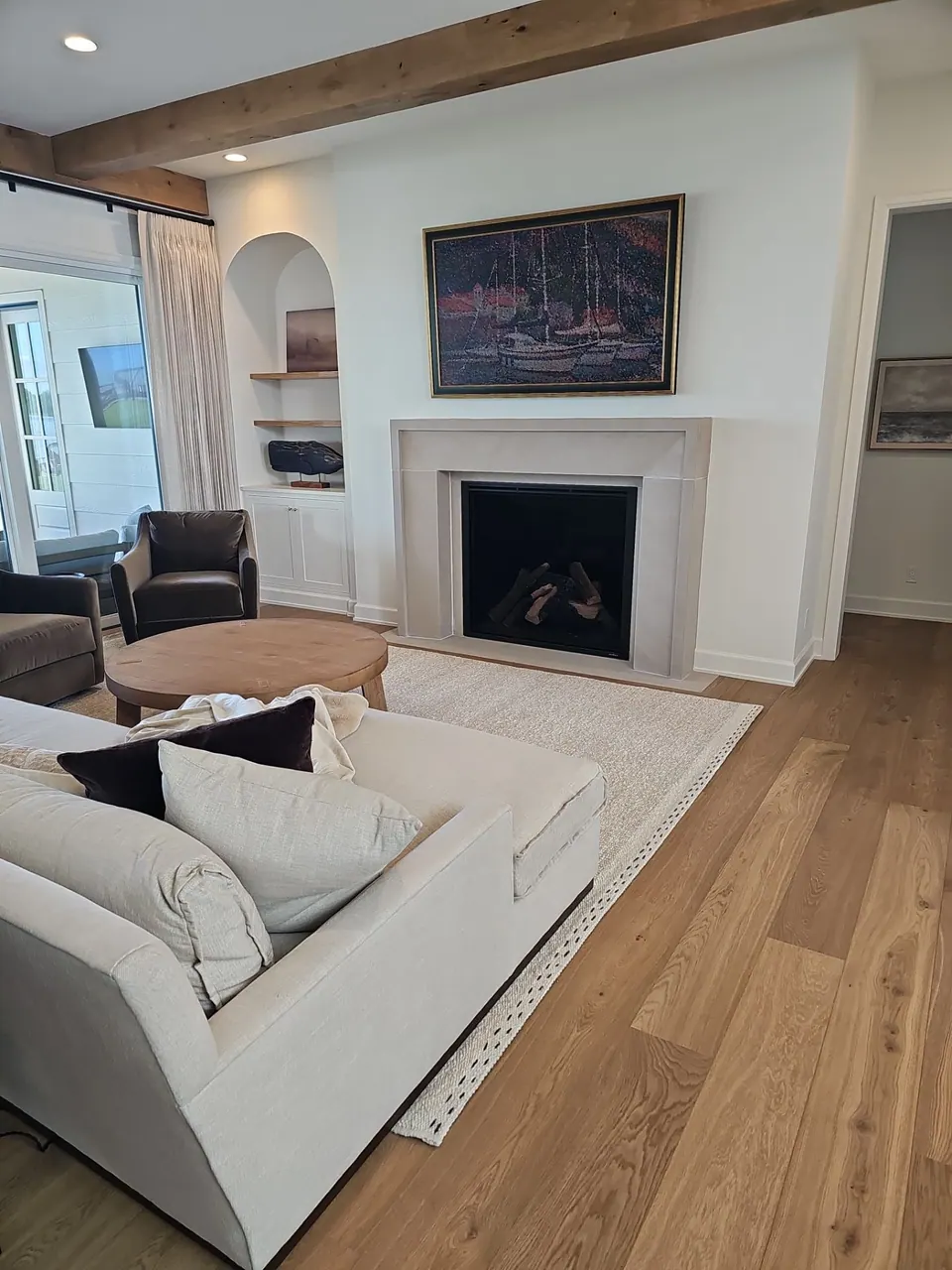
Plymouth housing, decade by decade
Plymouth became a village in 1955 and a city in 1974, and it filled in largely from east to west. The east side around Medicine Lake and Parkers Lake has much of the older stock: many ramblers, split-levels and modified two-stories from the 1960s through the 1980s, with cedar, hardboard and some aluminum siding, and stained trim inside. The middle of the city along Hwy 55 and Bass Lake Road has a lot of 1980s and 1990s two-stories, where hardboard and Masonite siding is common and interiors have oak trim and honey-oak kitchens. The west side, toward County Road 101 and the Wayzata school district, leans 1990s through 2010s: vinyl and LP SmartSide, then fiber cement, with white trim and bigger open rooms. Cabinet painting is a big part of what we do in the middle belt, because those 1990s oak kitchens are solid and worth keeping.
Lakes, trees and Plymouth exteriors
Plymouth has more water than people expect: Medicine Lake with French Regional Park on its north shore, Parkers Lake, Bass Lake on the northwest edge, plus creeks and wetlands throughout. Homes on and near the lakes get the same split we see on Lake Minnetonka, with sun on the water side and damp shade on the other. The bigger factor across most of Plymouth is tree cover. The 1960s and 1970s neighborhoods have fifty-year-old oaks and maples over them, and the north walls under that canopy hold moisture and mildew; that is where hardboard siding swells at the bottom edges and paint lets go. Newer west-side neighborhoods are more open and take more sun and wind. We paint Plymouth exteriors roughly May through mid-October and start with the shaded walls.
Where we work in Plymouth
Plymouth is big enough that we think of it in pieces: the Medicine Lake and Parkers Lake side on the east, the Plymouth Creek and Bassett Creek neighborhoods in the middle, Bass Lake to the northwest, and the west side along County Road 101 and County Road 6 that borders Medina and Wayzata. Five school districts cover the city (Wayzata, Robbinsdale, Osseo, Hopkins and West Metro), which is one way to see how much ground it covers. We are about 25 minutes away, with two routes in: Hwy 12 east to I-494 north, or Hwy 55 east through Medina. Interior work here runs all year, and the west side in particular is close enough to our shop that a quick sample visit is no trouble.
Interior painting in Plymouth
Plymouth is where a lot of our repaint interiors happen: 1980s and 1990s two-stories whose walls have been the same builder beige for twenty years, oak trim that the owners want white, and kitchens that make more sense painted than replaced. Winter is our busiest interior season and Plymouth is an easy drive. Before you get an estimate, start with How interior painting goes, and what moves the cost.
Exterior painting in Plymouth
Plymouth exteriors run the full range: cedar and hardboard from the 1960s and 1970s on the east side, Masonite and hardboard from the 1980s and 1990s in the middle, vinyl, LP and fiber cement on the west. Hardboard is the one to watch; it swells where it stays wet. We scrape, sand, prime bare spots and caulk before color, and we tell you if a board should be replaced instead of painted. See exterior house painting and siding painting.
Where we work in Plymouth
- Medicine Lake
- Parkers Lake
- Bass Lake
- Plymouth Creek
- Bassett Creek
- County Road 101 corridor
- Wayzata school district neighborhoods
Painting services in Plymouth
Questions from PlymouthStraight answers.
Is it worth painting the honey-oak cabinets in a 1990s Plymouth kitchen?
Usually yes, if the boxes and doors are solid wood or good plywood, which most 1990s Plymouth kitchens are. We take the doors and hardware off, clean and scuff every surface, fill the grain if you want a smooth look, bonding-prime and spray a cabinet enamel. It costs a fraction of replacement and the layout stays as it is.
Our 1980s Plymouth house has hardboard siding that is swelling at the bottom. Paint or replace?
It depends on how much has swelled. Hardboard that is soft, swollen or delaminating should be replaced before painting, because paint will not hold on it. Boards that are sound but chalky and faded paint well after washing, sanding and priming. We walk the house and mark what needs replacing before we quote, so there are no surprises.
Can you paint the stained oak trim in our Plymouth two-story white?
Yes, and it is one of the most common requests we get in the 1980s and 1990s neighborhoods. Oak trim needs a good cleaning, a scuff sand, a bonding primer and two coats of enamel; the grain will still show a little unless we fill it. It takes longer than repainting white trim, and the change is big.
Do you work in every part of Plymouth, or only the west side near Medina?
All of Plymouth. The west side along County Road 101 is closest to our shop, but Medicine Lake, Parkers Lake and the Bass Lake Road neighborhoods are about 25 minutes for us either way. We schedule Plymouth jobs by the week rather than the day, so the extra miles do not change the estimate or the timeline.