

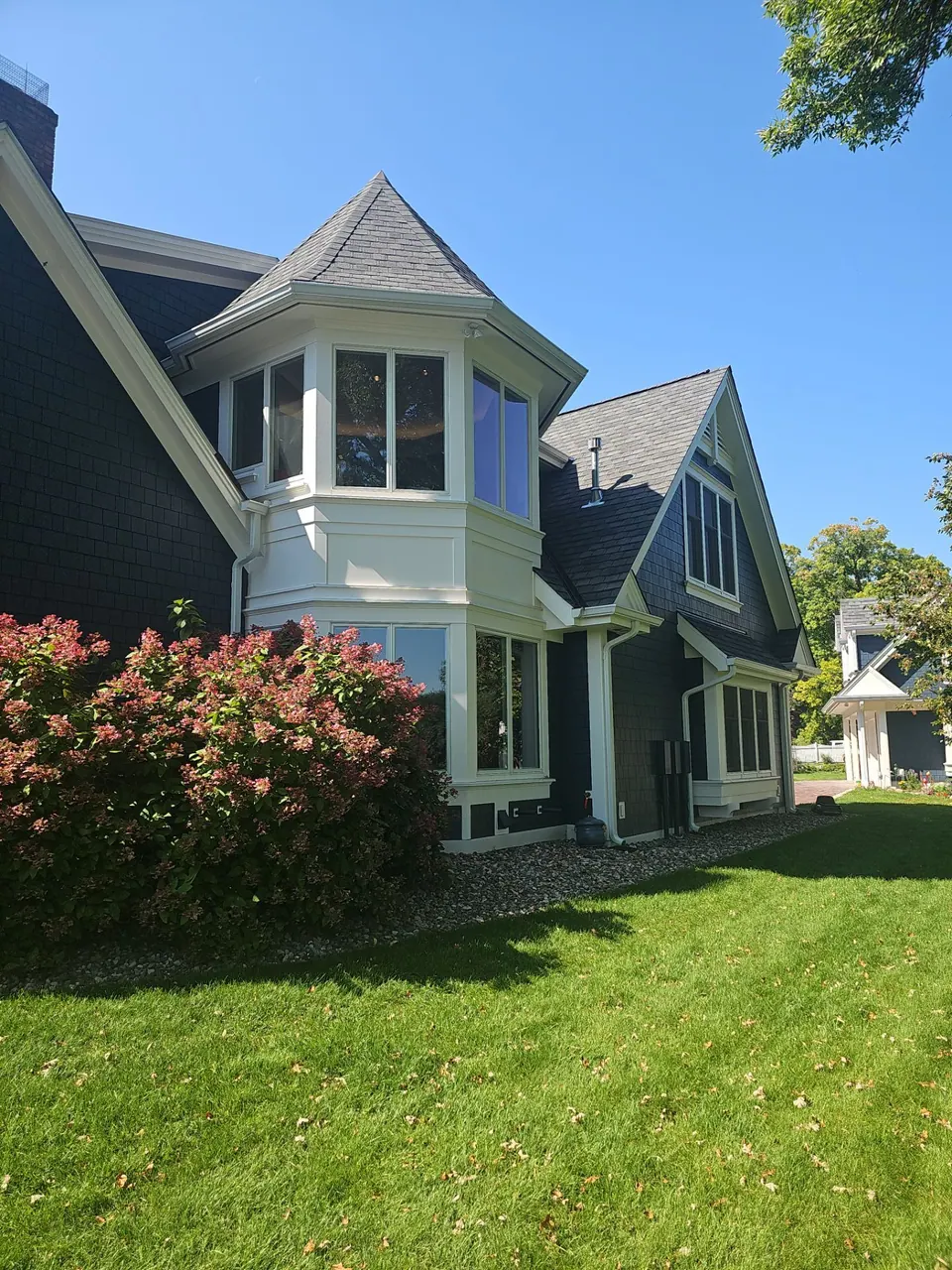
Lap siding, LP SmartSide and engineered wood
Horizontal lap siding in wood or engineered wood is the bulk of what we paint. The weak points are the same on both: the bottom edge of each board, the butt joints where two lengths meet, and the ends near corners and windows. Water sits at those spots, freezes, and lifts the paint. Engineered wood like LP SmartSide holds paint very well when its factory primer is intact and the cut ends were sealed at installation, and fails fast where they were not, so we look at every joint and end before we quote. Old hardboard from the 1980s and 1990s swells at the bottom edge when water gets in, and swollen board is a replacement, not a paint job. On sound siding, we spot prime the bare edges, caulk the joints, and apply two coats of acrylic, sprayed and back-rolled so it gets into the laps.
- Bottom edges, butt joints and cut ends get the closest look
- Engineered wood: intact factory primer paints well, unsealed ends do not
- Swollen hardboard is a replacement, not a repaint
Fiber cement, stucco and cedar: three different surfaces
Fiber cement holds paint longer than wood because it does not move with moisture, but a factory finish that has chalked needs a wash and a bonding primer or the new coat will not grip. Stucco, common on west-metro homes from the 1990s and 2000s, is porous and has to be fully dry before it is painted; we use an elastomeric or masonry-grade acrylic that bridges hairline cracks, and we repair anything wider than a hairline first. Cedar, including shakes and shingles, is the fussy one. Its tannins bleed through light colors and turn them brown, so cedar gets a stain-blocking primer before any pale topcoat, and weathered cedar that has gone grey has to be washed and lightly sanded to expose wood that can still hold a finish. Each of these is a different estimate line, and we say which you have.
Chalking, caulk joints and the bottom course
Three things decide how long a siding paint job lasts. First is chalk: old paint breaks down into a powder, and new paint applied over it bonds to the powder rather than the siding. A wash and a bonding primer where the chalk is heavy solve it. Second is caulk. Joints, corner boards and window casings are where water enters, and old caulk pulls away in the cold. We cut out the failed caulk and reapply after primer, not before. Third is the bottom course of siding, where snow piles up against the house for four months and splashback from the roof line keeps it wet. That course gets the most careful scraping and priming, and we tell you if the grade or the gutters are keeping it wet in a way paint cannot fix.
Minnesota has two painting seasons
Exterior season runs roughly May to mid-October. Interior work runs all year.
Exterior paint wants the wall and the air above 50°F for a couple of days. Around here that is roughly May through mid-October, and low-temperature products stretch the shoulders. The other months are interior season: walls, trim, cabinets and built-ins.
Navy = exterior window · paper = interior season
When we would talk you out of it
- Vinyl siding you want darker. Dark paint on vinyl absorbs heat and warps the panels. A same-or-lighter color can work with the right paint, but a dark repaint is a mistake we will not make for you.
- Siding that is rotten, delaminating or swollen at the bottom edge. Replace the bad boards first. We are glad to prime and paint the new material and blend the whole side.
- Aluminum siding that is dented and chalked through. It can be painted after a thorough wash, but if the finish has failed to bare metal across whole walls, new siding usually makes more sense than paint.
What you get
- Siding material identified and prepped its own way
- Washed to remove chalk and mildew, then dried fully before priming
- Bare edges and cut ends spot primed the same day
- Failed caulk cut out and replaced over primer
- Sprayed and back-rolled so paint gets into the laps and texture
- Two coats of acrylic exterior paint, listed on the estimate
How it goes
- 1
Identify the siding from photos
Send a photo of each side and a close-up of a joint or bottom edge. We can usually tell lap wood from engineered wood from fiber cement before we come out and quote the right prep.
- 2
Wash, dry, scrape and sand
Low-pressure wash to remove chalk and mildew, a day to dry, then scraping to a sound edge and feathering with a sander so the old paint line does not telegraph.
- 3
Meter, prime, caulk
Wood metered for moisture before primer. Bare spots, cut ends and cedar primed with the right primer for the material. Failed caulk replaced over the primer.
- 4
Two coats, into the laps
Sprayed and back-rolled on lap and engineered siding, rolled on stucco, brushed where trim meets siding. Two coats, then a walk around the house with you.
How much does it cost to paint siding?
Siding is quoted from photos of each elevation and a walkthrough, and the material and its condition decide most of the number. Sound lap siding that has faded is a wash-and-two-coats job. Peeling siding with bare wood on the north side needs days of scraping and priming first. Cedar adds a stain-blocking primer step, stucco adds crack repair and a masonry-grade paint, and chalked fiber cement adds a bonding primer. Two-story and walkout homes take more ladder and staging time. Trim is usually a second color and a separate line. The estimate is free, written and lists the prep so you can compare it with another bid.
- Siding material and its current condition
- Amount of peeling and bare wood to prime
- Stories, walkouts and gables that need staging
- Caulk joints, corner boards and window casings to redo
- Special primers: stain-blocking for cedar, bonding for fiber cement
- Trim and second colors included
Questions we get on the phoneStraight answers.
Can LP SmartSide be painted?
Yes, and it holds paint well when the factory primer is intact and the cut ends were sealed at installation. We wash it, spot prime any bare or weathered spots and unsealed ends, caulk the joints, and apply two coats of acrylic. Where ends were left raw and have swelled, those pieces need replacing before paint.
How do you paint stucco in Minnesota?
Wash it, let it dry completely, repair any cracks wider than a hairline, then roll on a masonry-grade or elastomeric acrylic that bridges the fine cracking stucco develops through freeze-thaw. Stucco is porous and drinks paint, so it takes more material per square foot than lap siding and needs a full dry day after washing.
Why does paint keep peeling off my cedar siding?
Usually because the cedar was painted without a stain-blocking primer, or because it was wet when it was painted. Cedar tannins bleed through and push the paint off, and cedar holds moisture on shaded walls. The fix is a full scrape, a dry day, a stain-blocking primer and then two coats, with the north wall checked with a moisture meter first.
How do you know what kind of siding I have?
From a close photo of a joint or a bottom edge, usually. Wood lap shows grain and splinters; engineered wood has a uniform embossed texture and a smooth back; fiber cement is heavy, brittle at the edge and cuts with a dusty saw; stucco and cedar are obvious. We confirm at the walkthrough before we quote the prep.
Related
Where we do this work
Siding painting across Independence, Medina, Corcoran, Orono, Wayzata, Plymouth, Maple Grove and Minnetonka, and the rest of the west metro and Central Minnesota. See the full service area.