

By Kirk at Brushtek · September 8, 2026 · Interior painting
What Drives the Cost of Interior Painting in the Twin Cities West Metro?
The short answer: Interior painting cost is mostly labor hours, and hours come from room count, ceiling height, wall condition, how much trim and how many doors there are, how big the color change is, and how much furniture we work around. We quote from photos or a short walkthrough, in writing, and the estimate is free.
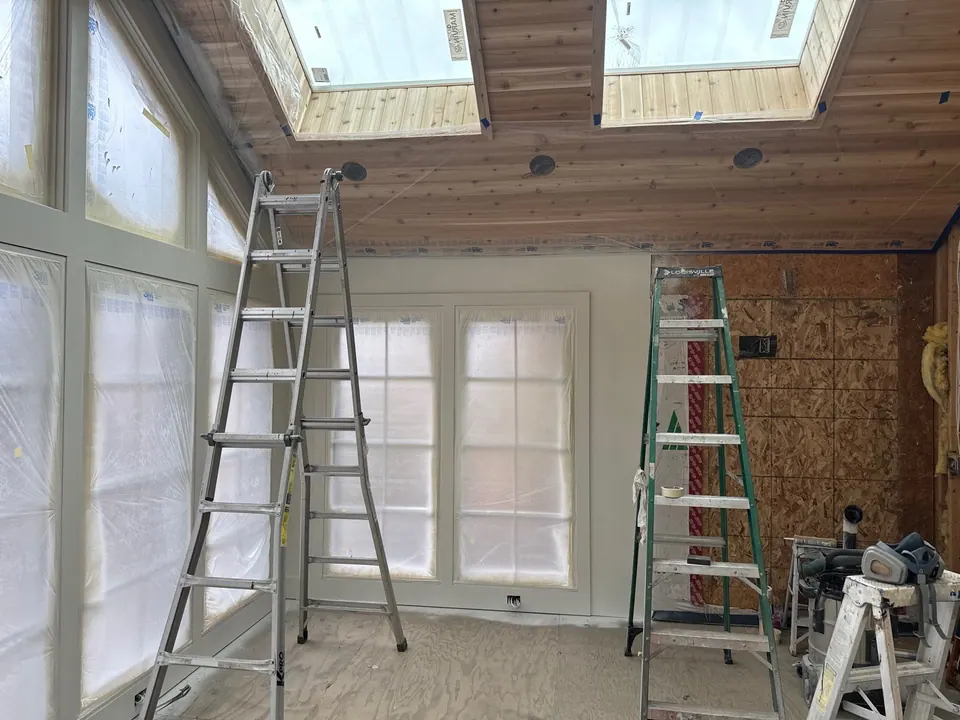
Paint is the cheap part of a paint job. Almost everything on an interior estimate is labor, and labor is hours. So when a homeowner in Plymouth asks us what a job will run, the honest answer is that it depends on how many hours the rooms will take, and that comes from a handful of things we can see in a walkthrough or a set of photos. Here is what we look at, in the order it usually matters.
What does it actually cost to paint the inside of a house?
We do not publish prices, and we would be wary of any painter who quotes a whole house without seeing it. Two houses with the same square footage can be a full day apart in labor. One has eight-foot ceilings, smooth walls, and a single color throughout. The other has a two-story foyer, a wall of built-ins, and a homeowner going from dark green to off-white. Same floor plan on paper, very different jobs.
What we can tell you is exactly which factors move the number, so you can see where your own house lands before we ever show up. That is what the rest of this post does.
Room count and ceiling height
Room count is the obvious one. More rooms means more wall area, more cutting in along ceilings and trim, and more setup and cleanup. But rooms are not equal. A ten-by-twelve bedroom with a closet and one window is a quick room. A great room open to the kitchen with a vaulted ceiling is not.
Ceiling height matters more than most people expect. Once walls go past nine feet, we are working off ladders or a small scaffold for the cut lines, and every pass takes longer. The two-story foyers and vaulted great rooms in the 1980s and 1990s two-stories that fill Plymouth and Maple Grove are the classic example. That one open space can take as long as three ordinary bedrooms.
Ceilings themselves are a separate line. Painting a ceiling is usually faster per square foot than walls (no windows, no outlets, fewer cut lines), but textured ceilings drink paint and need a heavier nap roller, and a ceiling that has not been painted since the house was built will often need two coats to look even.
Wall condition and repair
This is the factor that surprises people, and the one that decides how the finished job looks. Paint does not hide problems. In low-angle light from a window, a new coat of eggshell will show every nail pop, every old anchor hole, every settling crack above a door.
Before we paint, we fix what we find:
- Nail pops and screw pops, which show up in houses after their first few heating seasons as the framing dries out.
- Anchor holes, picture hooks, and patches from a previous owner that were never sanded flat.
- Settling cracks at the corners of window and door openings.
- Water stains from an old roof leak or a bathroom above, which need a stain-blocking primer or they bleed through.
- Torn drywall paper where tape or wallpaper came off.
A house that has been lived in hard, or a rental between tenants, can carry a lot of this. If the walls need more than spot patching, we tell you up front and price the drywall repair before painting as its own line so you can see it.
Glossy walls are another condition issue. If a previous owner used semi-gloss on walls (kitchens and bathrooms from the 90s, often), the new coat needs a scuff sand and a bonding primer or it will not hold. That adds time.
Trim, doors and built-ins
Trim is slow work and it is priced separately from walls. Baseboard, casing, crown, window stools and doors all get brushed or sprayed, and each one has edges that need a clean line against the wall. A room with plain baseboard and a single door is one thing. A dining room with wainscoting, crown, and a built-in hutch is a different day.
Doors deserve their own mention. A six-panel door has a lot of edges. Painting both sides, plus the jamb and the stop, takes real time per door, and a west-metro two-story can have twenty-five of them. If the doors are currently stained oak and you want them white, they need cleaning, sanding, and a bonding primer first, so the count and the current finish both matter.
Most of our finish work for builders is exactly this kind of trim and built-in painting, and it is the part of a job where the difference between a careful painter and a fast one shows.
Color changes and coats
Going from a light color to a similar light color is usually two coats. Going from a deep color to white, or from white to a saturated color, can take a tinted primer plus two coats, and reds and deep blues are known for needing more. Every extra coat is another full pass through the room.
The number of colors matters too. One color throughout is efficient. Five colors across five rooms means more cut lines where they meet in hallways and more changeovers of rollers and trays. Accent walls are quick when the walls around them are already fresh and slow when they are the only thing being painted, because setup is the same either way.
If you are not sure about colors, decide before we start, not on day one. We can help with that through a color consultation, and settling it early keeps the estimate accurate.
Furniture and access
An empty room takes less time than any lived-in one. That is a big reason move-in and move-out painting is efficient: nothing to move, nothing to cover, nothing to work around.
In a lived-in house, we move furniture to the center of the room and cover it, take down what we can from the walls, and mask floors and fixtures. That is normal and included. What adds time is heavy furniture that needs two people, a home office that has to stay working, a piano, a wall of shelving that must be emptied, or a room we can only reach by carrying ladders up a tight stairway. Tell us about those in advance and we will plan for them.
Access also includes people. A house where we can work straight through is faster than one where we need to finish the kitchen by four every day so dinner can happen. We can do either. It just changes the hours.
Timing and the calendar
When you book matters a little. Winter is our busiest interior season, because exterior work stops and everyone moves indoors, and that is also when the dry furnace air makes paint flash off quickly between coats. Late spring and summer, when our exterior crew is out, interior calendars have more open days.
Booking a whole-house repaint in one visit is more efficient than doing it three rooms at a time over a year. Setup and travel happen once. If budget is the constraint, though, doing it in phases is completely fine, and we will tell you which rooms make sense to group together.
How we quote from photos
You do not need to wait for a visit to get a first read. Text us photos of the rooms: one wide shot per room from a doorway, one of the ceiling, and close-ups of any damage you already know about. From that we can tell ceiling height, trim style, wall condition, and how much furniture is in play, and we can give you a realistic range before anyone drives out.
For a whole house, or anything with repair work, one of us will still come walk it. We measure, check the walls with a light, count doors, and ask about colors. Then you get a written estimate that lists what is included, room by room, so there is no mystery about what you are paying for.
That process is the same for a single bedroom in Maple Grove or a full repaint on a new build for one of the builders we work with. The interior house painting page covers what is included in a standard job if you want the detail.
When you are ready for a number on your own house, send us a few photos through the contact page and we will start there.
Want us to look at your project?
Text a few photos and tell us what you are after. Written estimate, usually within one business day.
Related questionsStraight answers.
Why is interior painting so expensive?
Because almost all of the cost is skilled labor, and a good interior job spends most of those hours on things you never see: moving and covering furniture, patching and sanding walls, priming repairs, and cutting clean lines along trim and ceilings. The paint is a small share. Skip the prep and the price drops, and so does the finish.
How much do painters charge in Minnesota?
Most painters price by the labor hours a job will take plus materials, and hours depend on room count, ceiling height, wall condition, trim, and color changes, so there is no honest single number for a house nobody has seen. We give free written estimates, and you can text photos for a first read before anyone drives out.
Is it cheaper to paint your own house?
On paper, yes, since you only buy paint and supplies. In practice a whole-house repaint takes an amateur several weekends, and the ladders, the patching and the cut lines are where it usually goes wrong. A single bedroom is a fair DIY job. A two-story foyer or a full house is where hiring a painter pays off.
Do painters need a license in Minnesota?
No. Minnesota does not issue a painter's license, so there is no state license to look up. What you can check is a written estimate, photos of finished work, and how clearly the painter explains the prep. A painter who is vague about patching and priming is the real red flag, license or not.