

By Kirk at Brushtek · September 9, 2026 · Interior painting
Can You Paint Inside During a Minnesota Winter?
The short answer: Yes, and winter is when we do most of our interior work. Furnace-heated air in a Minnesota house runs very dry, which helps paint dry and recoat quickly, and modern low-VOC paints mean you do not need the windows open. We work room by room so the house stays warm and usable while the job is on.
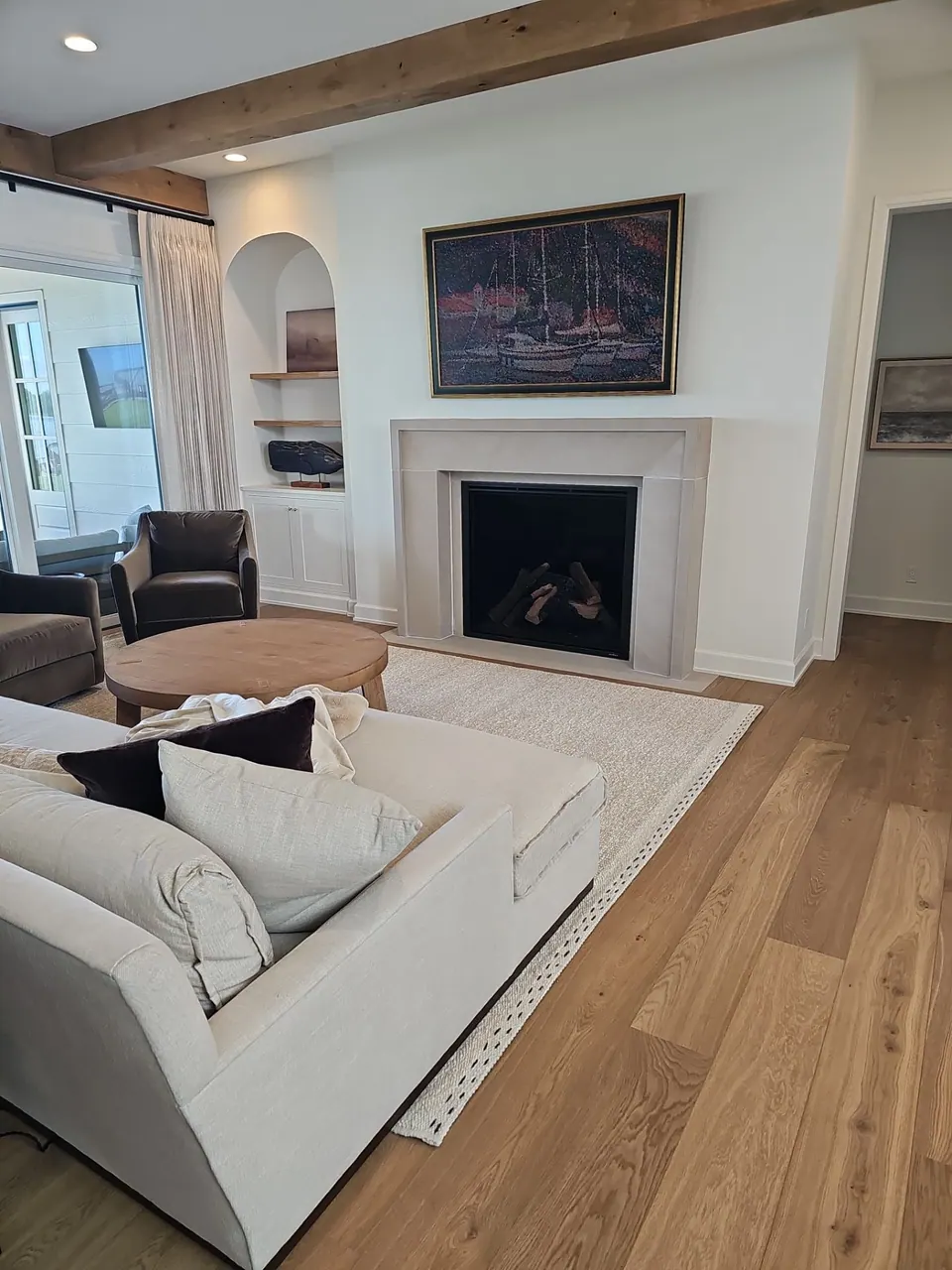
Every year around Thanksgiving someone tells us they were going to wait until spring to paint the living room, when they can open the windows. We get it. But that idea comes from the days of oil-based wall paint, and it is backwards for how modern paint and a Minnesota house actually behave. Winter is when we do most of our interior work, and there are good reasons for it beyond the fact that nobody can paint outside in January.
So can you paint inside your house in the winter here?
Yes. Interior painting has no season in Minnesota. The house is heated, the walls are at room temperature, and the paint neither knows nor cares that it is ten below outside. Interior work runs straight through from November to April, and a lot of the built-ins, trim and whole-house finish work we do for west-metro builders happens in the coldest months, because that is when the houses are closed in and ready for paint.
The two things that actually change in winter, indoor humidity and ventilation, both work in your favor once you understand them.
Dry furnace air helps paint dry
A forced-air furnace running through a Minnesota January pulls the indoor relative humidity down hard. Many houses sit in the 20 to 30 percent range without a humidifier. That is dry enough to crack your knuckles, and it is close to ideal for water-based paint.
Latex paint dries by evaporation. Water leaves the film, the resin particles pack together, and the coat goes from wet to dry to the touch to recoatable. In a humid July house with the air conditioning fighting a 70-degree dew point, that can take hours. In a dry January house, a wall is often ready for its second coat in well under the time printed on the can.
Faster drying has a catch. In a large room, paint can start to set before we have worked all the way across the wall, which leaves lap marks where a fresh pass overlaps a drying one. We handle that by keeping a wet edge, working in sections, and rolling walls in a consistent direction, and in big open rooms we sometimes add an extender to the paint to give it a longer open time. That is ordinary technique, but it is the reason a winter job in a two-story great room needs a painter who has done one before.
One clarification, because people mix these up: drying is fast in winter, but curing is not. Latex reaches its full hardness over a few weeks regardless of the season. So a wall painted in January is dry the same day and ready to hang pictures on in a day or two, but we still ask you to wait a couple of weeks before scrubbing it.
Low-VOC paint means you do not need the windows open
The old reason to wait for spring was fumes. Oil-based and high-solvent paints smelled for days and gave people headaches, and the only fix was open windows. The paints we use on walls and ceilings now are low-VOC or zero-VOC waterborne products. There is still a mild smell while the coat is wet, but it clears within hours, and it is nothing like the old stuff.
That said, we still ventilate. Here is how that works in a sealed-up Minnesota house in February:
- We run the bathroom exhaust fan, or a box fan in a window cracked an inch, in the room we are painting. That pulls the moist air and any smell out without dumping cold air through the house.
- We close the door of the room being painted and paint one or two rooms at a time, so the rest of the house stays at temperature.
- If your furnace has a fresh-air intake or an air exchanger, which most houses built in the last twenty-five years have, leaving it on its normal setting does the rest.
Trim enamels and cabinet enamels are a partial exception. Even the waterborne versions have more odor than wall paint. For those we ventilate more deliberately and let you know which rooms to keep clear for a day.
Working room by room in a heated house
Winter changes our sequence. In summer we might open the whole main floor at once. In winter we work in a tighter loop: mask and paint one room, move to the next while the first dries, come back for the second coat. Doors stay closed, the furnace keeps up, and you keep the rest of the house.
A few practical things we do that matter more in January than in June:
- Paint is never left in the truck overnight. Latex paint that freezes is ruined, and a truck at minus ten will freeze it. Everything comes inside.
- We put runners down from the door to the work area. Snow melt and road salt on hardwood is worse than paint drips, and it tracks in on every trip.
- We bring our own work lights. A north-facing bedroom in December gets about eight hours of weak light. LED work lights let us see the wall, but they also shift how colors read, so we ask you to look at samples in daylight before you commit.
If you have a whole-house humidifier, you can leave it running. It will not hurt the paint.
Bathrooms are the one exception to the dry-air rule. A hot shower in a closed January bathroom spikes the humidity in that room to summer levels for an hour, and the exterior wall behind the tub is the coldest wall in the house, so fresh paint there can streak the same way an exterior wall does on a dewy night. When we paint a bathroom in winter, we ask that nobody showers in it until the walls have dried overnight.
Cabinets and trim are winter jobs
If there is one job we would steer into winter on purpose, it is cabinets. Cabinet painting is a doors-off, sprayed process that happens partly in your kitchen and partly in a spray setup, and the dry indoor air helps the enamel flash between coats. The kitchen is out of full service for a stretch either way, and most families find a week in February easier to schedule around than a week in July.
Trim, built-ins and doors are the same story. Enamel levels out nicely in dry air, and the kind of built-in and wainscoting work we do on new custom homes is almost all winter work, because that is when the builders have the houses ready for finish.
Why winter is the easiest time to get on our calendar
Here is the practical part. From May to October, exterior painting takes crew time, and every painter in the west metro is juggling both. In winter, exterior work stops. That means more people on interior, shorter waits, and more flexibility on dates.
It also means we can do the slow, careful work without pressure. A 1970s split-level in Minnetonka with textured ceilings, dark stained trim and thirty years of nail holes is a real project. Doing it in January, when we can take the time to fill, sand, prime and paint properly, produces a better result than squeezing it between two exterior jobs in August.
The same goes for a farmhouse outside Delano that needs every room done before a move-in date. Winter gives us room on the calendar to do the whole house in one stretch instead of three visits.
If you have been holding a room until the weather turns, the interior house painting page covers what a full job includes, and you can send photos through our contact page whenever you are ready.
Want us to look at your project?
Text a few photos and tell us what you are after. Written estimate, usually within one business day.
Related questionsStraight answers.
Is it OK to paint inside in the winter?
Yes. Interior paint only cares about the temperature and humidity in the room, and a heated Minnesota house in January is warm and dry, which is close to ideal for water-based paint. The old reason to wait for spring was solvent fumes, and low-VOC wall paints have made that a non-issue for most rooms.
Does paint dry faster in winter?
Inside a furnace-heated house, yes. Indoor humidity often drops into the 20 to 30 percent range in a Minnesota winter, and latex paint dries by evaporation, so walls are usually ready to recoat sooner than in a humid summer. Full cure still takes a few weeks regardless of season, so go easy on scrubbing at first.
Do you need to open windows when painting inside?
Not with low-VOC or zero-VOC wall paint. A cracked window with a fan, or a bathroom exhaust fan, moves enough air to clear the mild smell without dumping cold air through the house. Trim and cabinet enamels have more odor, so for those we ventilate more deliberately and tell you which rooms to keep clear.
How cold is too cold to paint indoors?
Most interior paints want the room above about 50°F, and ideally in the 60s, both while painting and for a day after. That is only an issue in a house with the heat off, an unheated garage or porch, or a new build running temporary heat. In any lived-in house the furnace keeps the walls well above that.